Restaurant Style Seared Scallops
Highlighted under: Around the World Recipes
I absolutely love preparing seared scallops at home because they bring a touch of elegance to any meal without being overly complicated. The key to achieving that perfect golden crust is in the high heat of the pan and using dry scallops. When cooked correctly, they become sublime in texture, melting in your mouth with delicate flavor. I often pair them with a bright citrus sauce or serve them on a bed of creamy risotto, making them an impressive dish for special occasions or a cozy weeknight dinner.
Trying to replicate restaurant-style seared scallops at home has been one of my culinary challenges that brought me immense joy! After several attempts, I discovered that using a cast iron skillet not only helps achieve a better sear but also gives the scallops a lovely caramelization. The secret lies in letting the pan get really hot before adding the scallops, ensuring that they don't stick and cook evenly.
I usually recommend dry scallops, as they absorb flavors beautifully and maintain a delightful texture. Pairing them with a homemade butter sauce infused with garlic and herbs takes this dish to another level, making it not just a meal but a culinary experience!
Why You'll Love This Recipe
- Perfectly seared crust with a tender inside
- Classic flavors brought to life with minimal ingredients
- Quick to prepare yet elegant enough for entertaining
Understanding Scallops
Choosing the right type of scallops is crucial for achieving the best flavor and texture. Dry sea scallops, unlike their wet counterparts, are the key to a beautifully seared dish. Wet scallops contain added moisture and preservatives that can prevent a proper sear and may create a rubbery texture. Always check the label for 'dry' or 'fresh' scallops to elevate your dish. This small distinction can dramatically transform the final outcome.
When selecting scallops at the market, look for ones that are firm to the touch and have a mild oceanic scent. Avoid scallops that appear dull or have a strong fishy odor, as these indicators suggest poor quality. It’s often best to buy them the day you plan to cook to ensure maximum freshness. Simply make sure you store them correctly in the refrigerator if you're not cooking them right away.
The Art of Searing
Achieving the perfect sear on scallops is an art form that requires the right technique and timing. It’s essential to use a hot, heavy-bottomed skillet—cast iron is ideal due to its excellent heat retention. Preheat the skillet over medium-high heat until it’s hot enough that a drop of water flicked onto the surface sizzles immediately. This heat is essential for developing that coveted golden crust on the scallops.
Once you place the scallops in the skillet, resist the urge to move them around. Letting them cook undisturbed for 2-3 minutes on each side allows for proper browning and caramelization. This step is crucial; the scallops will naturally release from the pan once they are properly seared. Keep an eye on the edges, which should turn golden brown, signaling that it’s time to flip.
Serving Suggestions
While seared scallops are delightful on their own, they shine even more when paired with complementary flavors. A bright citrus sauce, made with orange or grapefruit, can enhance the sweetness of the scallops, while a rich, creamy risotto provides a luxurious base. For a fresh touch, consider serving them atop a salad of arugula or mixed greens, drizzled with a tangy vinaigrette.
If you’re looking to impress at a dinner party, consider garnishing your scallops with microgreens or edible flowers for a touch of elegance. Additionally, these scallops are versatile enough to be served as an appetizer or a main course. When preparing for a gathering, think about making a double batch, as leftovers can be easily reheated over low heat—just be careful not to overcook them again.
Ingredients
Ingredients
- 6 dry sea scallops
- Salt and black pepper, to taste
- 2 tablespoons olive oil
- 2 tablespoons unsalted butter
- 2 cloves garlic, minced
- 1 tablespoon fresh lemon juice
- 1 tablespoon chopped parsley
Instructions
Preparing the Scallops
Pat the scallops dry with paper towels to remove moisture. Season both sides generously with salt and black pepper.
Searing
Heat the olive oil in a cast iron skillet over medium-high heat until it starts to shimmer. Carefully place the scallops in the skillet, leaving space between each one.
Cooking Time
Cook the scallops for about 2-3 minutes on each side without moving them, until they develop a golden brown crust.
Adding Flavor
Add butter and garlic to the pan, swirling it around the scallops. After the butter melts, spoon it on top of the scallops for extra flavor and moisture.
Finishing Touches
Remove the scallops from the skillet, drizzle them with fresh lemon juice and top with chopped parsley before serving.

Pro Tips
- Always use dry scallops for the best flavor and texture. Ensure your pan is hot enough before adding the scallops to achieve that beautiful sear.
Ingredient Tips & Substitutions
For the best flavor, use unsalted butter, as this allows you to control the seasoning of the dish. If you're looking for a dairy-free option, you can swap the butter for a high-quality olive oil or vegan butter, which will still give your scallops a beautiful finish. The garlic adds a depth of flavor that's essential, enhancing the natural sweetness of the scallops, but you can also experiment with shallots or scallions for a different twist.
If fresh parsley isn’t on hand, feel free to substitute it with other fresh herbs like basil or cilantro, which can lend a unique flavor profile to the dish. Additionally, if fresh lemon juice isn’t available, a splash of good-quality vinegar can provide the necessary acidity to brighten the dish.
Make-Ahead & Storage
While scallops are best enjoyed fresh, you can prepare some components ahead of time. Mince the garlic and chop the parsley in advance to save time during the cooking process. You can also prepare a lemon vinaigrette up to a day ahead and store it in the fridge; just give it a good shake before drizzling.
If you need to store cooked scallops, keep them in an airtight container in the refrigerator for up to 2 days. When reheating, do so gently in a skillet over low heat to avoid overcooking. Alternatively, you can serve them cold on a salad for a refreshing twist.
Scaling the Recipe
This recipe is very flexible and can easily be scaled up or down depending on your needs. For larger gatherings, simply increase the number of scallops, maintaining the same seasoning and cooking principles. Just be mindful of your skillet’s size; sear in batches if necessary to avoid overcrowding, which can lead to steaming rather than searing.
When scaling down, it’s just as easy to cut the recipe in half and still achieve the same level of deliciousness. Remember to adjust cooking times accordingly, especially for the scallops, as smaller batches may sear faster. Always trust your instincts and visual cues as your guide.
Questions About Recipes
→ Can I use frozen scallops?
Yes, but make sure to properly thaw them in the refrigerator overnight and pat them dry before cooking.
→ What other sauces can I serve with scallops?
A cream sauce, white wine reduction, or even a simple herb vinaigrette work beautifully with scallops.
→ How can I tell when scallops are done?
Scallops will turn opaque and firm to the touch. Overcooking will make them tough; they should be tender.
→ What should I serve with seared scallops?
They pair well with a variety of sides, including risotto, sautéed vegetables, or a light salad.
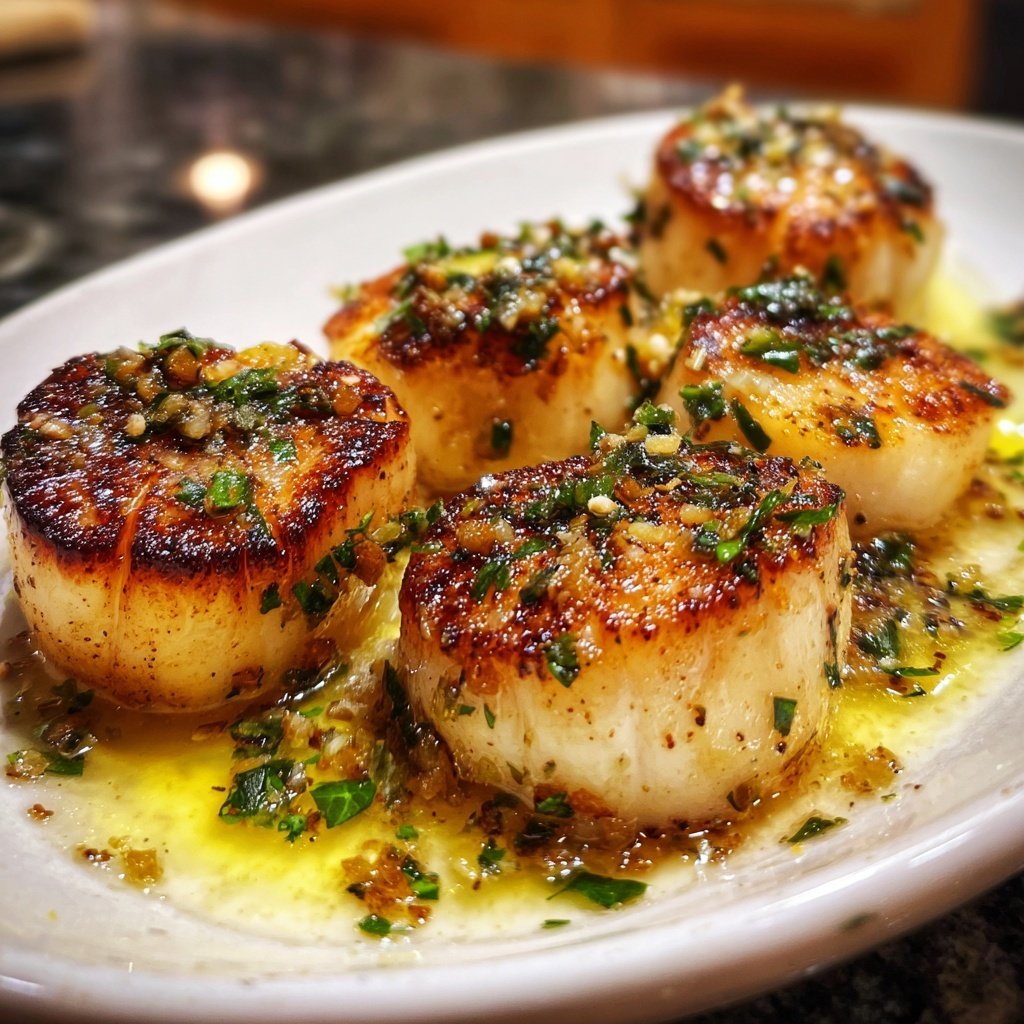
Restaurant Style Seared Scallops
Created by: Brittany Shaw
Recipe Type: Around the World Recipes
Skill Level: Intermediate
Final Quantity: 2 servings
What You'll Need
Ingredients
- 6 dry sea scallops
- Salt and black pepper, to taste
- 2 tablespoons olive oil
- 2 tablespoons unsalted butter
- 2 cloves garlic, minced
- 1 tablespoon fresh lemon juice
- 1 tablespoon chopped parsley
How-To Steps
Pat the scallops dry with paper towels to remove moisture. Season both sides generously with salt and black pepper.
Heat the olive oil in a cast iron skillet over medium-high heat until it starts to shimmer. Carefully place the scallops in the skillet, leaving space between each one.
Cook the scallops for about 2-3 minutes on each side without moving them, until they develop a golden brown crust.
Add butter and garlic to the pan, swirling it around the scallops. After the butter melts, spoon it on top of the scallops for extra flavor and moisture.
Remove the scallops from the skillet, drizzle them with fresh lemon juice and top with chopped parsley before serving.
Extra Tips
- Always use dry scallops for the best flavor and texture. Ensure your pan is hot enough before adding the scallops to achieve that beautiful sear.
Nutritional Breakdown (Per Serving)
- Calories: 350 kcal
- Total Fat: 22g
- Saturated Fat: 8g
- Cholesterol: 55mg
- Sodium: 196mg
- Total Carbohydrates: 6g
- Dietary Fiber: 0g
- Sugars: 1g
- Protein: 30g